

Osijek - Djakovo Tour
Cities Rich in History and Tradition






Heritage Capitals of Eastern Croatia
WALKING | Half Day | from 82 € | The two cities in Eastern Croatia are important for the cultural development of the region of Slavonia & Baranja. Both were candidates for the European Capital of Culture due to their long, tradition‑rich histories and their remarkable tangible and intangible heritage. Each of them also offers its own distinctive character.
About OSIJEK – River city with an impressive Art Nouveau heritage
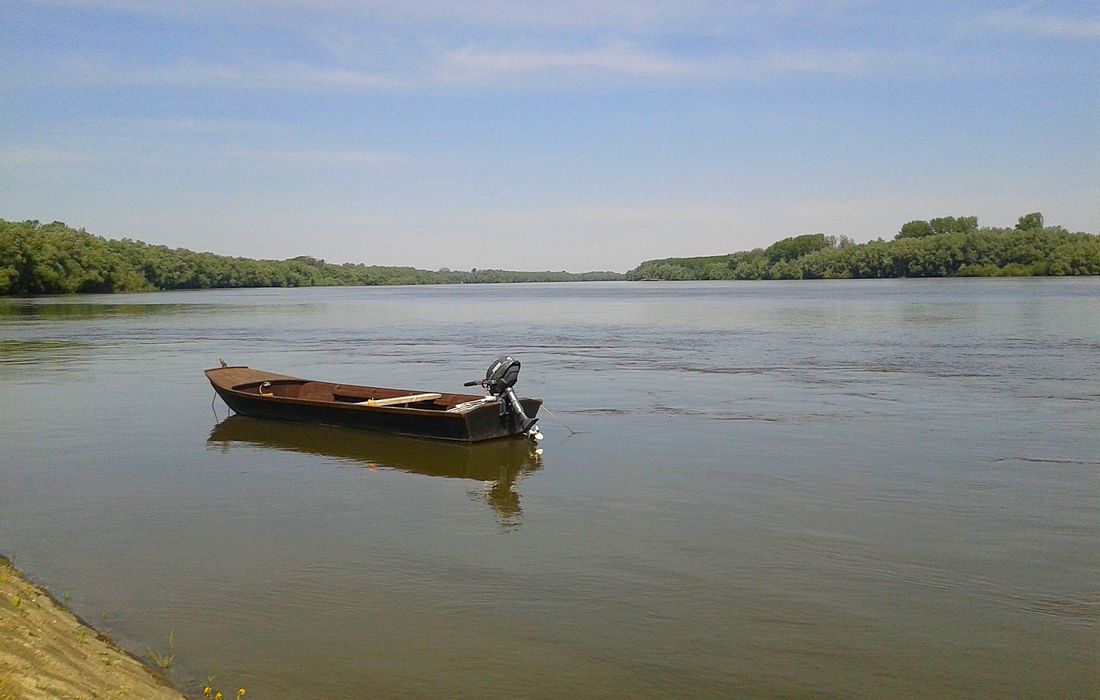
Osijek is the fourth-largest city in Croatia, with a population of nearly 100.000. It is the economic and cultural centre of the lowland region of Slavonia & Baranja in Eastern Croatia. It is also called the "capital city of Slavonia". This university city on the banks of the Drava River lies just 25 km (16 mi) upstream from the river’s confluence with the Danube. It has earned a well‑deserved reputation as Croatia’s most relaxing urban escape. Osijek is proud to carry the epithets "the Croatian greenest city", "the city of parks", "the cycling city", and "the city with the longest and the most beautiful river promenade in Croatia". Remarkable symbols of the city, the 19th-century Neogothic co-cathedral of St. Peter and Paul and theoldbaroquefort complex Tvrđa are just some of the reasons to visit this relaxed city on the Drava River.
Did you know that the British royal couple King Charles and Queen Camilla chose a photograph taken in Osijek’s Tvrđa during their 2016 royal tour of Croatia for their official Christmas card? During their visit to the Old Town, the royal couple met local performers dressed in traditional Slavonian costumes—and the moment captured there was later shared with the world.
About DJAKOVO – The old bishopric and Slavonian clerical centre
Djakovo has a population of almost 24.000 inhabitants. It is the second-largest town in the County of Osijek-Baranja and the clerical centre of the Slavonia region. That is why Ðakovo has the most impressive sacral buildings in the entire Slavonia and Baranja region – the Ðakovo Cathedral of St. Peter, the Archbishop's House, and the Manor houses, the Theological Seminary, and the parochial Church of All Saints. The remains of the defensive wall behind the cathedral and the bishop's court surrounded and protected the town in the 14th century. Đakovo’s old town, shaped in the 18th and 19th centuries and marked by baroque, secessionist, and historicist architecture, forms an essential part of the city’s rich cultural heritage. Just a short distance away, the State Stud Farm with Lipizzaner horses — boasting more than five centuries of horse‑breeding tradition — makes it a highlight no visitor should miss.
Did you know that the city of Đakovo, along with the (best known for the spring procession of the Ljelje Queens—a unique tradition inscribed on UNESCO’s Representative List of Intangible Cultural Heritage—stands out as one of the region’s most distinctive cultural communities), was chosen as a finalist for the European Destinations of Excellence project (EDEN), under the theme of cultural tourism? As you can see, with a reason.
ITINERARY

9:00 AM - Lipizzaner Horses - City Tour of Đakovo
The starting point for this day trip is in Osijek, “the capital of Slavonia“, where you will meet your guide. There is a possibility of picking up from your accommodation. This option is on request. After a 45-minute drive, we arrive in Đakovo. Our first stop is the impressive Đakovo State Stud Farm, home to the famed Lipizzaner horses and founded by the Bishops of Bosnia‑Sirmium in 1506. It is the oldest institution for breeding and selection in the Republic of Croatia. At that time, Stud Farm Đakovo was known and highly valued throughout the Austro-Hungarian Monarchy. After enjoying the company of the Lipizzaners, we continue our visit toward the centre of Đakovo. We will take a short walk along the Korzo street – the liveliest street in Đakovo. Our first stop will be the Museum of Djakovo, housed in a 19th‑century administrative building. The museum was founded in 1951–1952. This makes it one of the older regional museums in Eastern Croatia. Its permanent exhibitions cover Đakovo from the 13th century to the 1940s. The highlight of our Đakovo city tour is the Tour of the St. Peter's Cathedral – Bishop Strossmayer's masterpiece and the symbol of Đakovo. This striking blend of Gothic and Romanesque architecture is widely regarded as the most beautiful cathedral between Venice and Istanbul. After the cathedral tour, we will take a 15-minute coffee break before our transfer to the city of Osijek.

12:30 PM - Lunch - City Tour Osijek - Old Town Tvrdja
After exploring Đakovo’s most beautiful sights, our journey continues toward the City of Osijek. Before beginning our city tour, we’ll enjoy lunch at a local restaurant offering traditional cuisine. The Osijek tour includes a visit to the Upper Town, a true treasure trove of history and home to the impressive Neo‑Gothic Church of Sts. Peter and Paul. We will take a short walk through the city centre to the Winter Harbour along the Drava River. Driving along the European Avenue – one of the most beautiful Art Nouveau streets in this part of Europe, we continue to the Old Town Tvrdja - the old baroque citadel, a complex built in the 18th century with impressive defensive walls and town gates, and the Baroque circular pillar of the Holy Trinity on the main square. Tvrđa is the defining symbol of Osijek’s cultural identity.

4:00 PM - End of Day Trip
The excursion ends around 4:00 p.m. in Osijek's Old Town Tvrdja at the city walls along the Drava River.
- Tailor-made possibilities - additional combinations for this excursion:
- wine tasting - organised visits to the following museums: the Museum of Slavonia, the Museum of Shells - cycling along the Drava River - boat ride on the Drava River - trip to the Kopački Rit Nature Park.
Departure dates 2026: from March till December
Dates: on request
|
Group size |
2 pers. |
3 pers. |
4 pers. |
5 pers. |
6 pers. |
7 pers. |
|
Price per person |
197 € |
135 € |
129 € |
109 € |
93 € |
82 € |
- The excursion prices are based on a minimum of two (2) and a maximum of seven (7) participants.
- Definite departure will be confirmed to participants by email.
- This private day tour can be customized.
- Participants interested in a private trip for a larger group may contact Inlandia.com for an individual offer.
INCLUDED IN THE PRICE:
- Licensed local tour guide (English, German).
- All transfers according to the itinerary.
- Entrance fee for the Djakovo State Stud Farm.
- Entrance fee for the Museum of Djakovo.
- Coffee/Tea.
- Insurance and costs for the organization and realization of the tour.
NOT INCLUDED IN THE PRICE / Additional costs:
- Transfer to another starting/ending point (of your interest).
- Lunch in a local restaurant in Osijek.
- Additional health and cancellation insurance, which can be arranged by email to info@inlandia.com
- All other expenses not covered by the programme.
Find the ideal accommodation - with our recommendation: Country Estate Didin Konak
Note* For those who are more interested in experiencing Slavonia & Baranja region in Eastern Croatia, we recommend our excursions: Canoeing Kopacki Rit & Vukovar Danube Tour
Highlights of OSIJEK - Slavonian Capital
Tvrdja is the old town of Osijek, a baroque military complex with impressive defensive walls, town gates, a Romanesque core and the main square. The fortress city was built in 1712 by Prince Eugene of Savoy as part of a much larger strategic system of baroque fortifications on the border with the Ottoman Empire. Among the most significant preserved buildings in Tvrđa are Holy Trinity Square (1729–1730), the baroque fountain, the old gymnasium, the Museum of Slavonia, and numerous elegant aristocratic and bourgeois residences. The complex also includes the Church of St. Michael, renowned for its valuable interior and liturgical furnishings.
The Franciscan Monastery, founded in 1699, became the site of Slavonia’s first faculty in 1735, offering studies in philosophy and theology. That same year, Slavonia’s first printing house was also established here, marking an important milestone in the region’s cultural development.
The Neo-Gothic Co-cathedral of St. Peter and Paul, built in 1894, is the second-highest structure in Croatia after the Zagreb Cathedral. Its tower measures 90 m (295.28 ft). You can see it throughout Osijek. Its monumental proportions have earned it the nickname “cathedral,” even though it holds the status of a parish church.
European Avenue, located in the city’s Lower Town, is Osijek’s most beautiful Art Nouveau street. Its elegance comes from a row of majestic and charming Secessionist buildings that define the avenue’s distinctive character.
Highlights of DJAKOVO - Bishop’s City
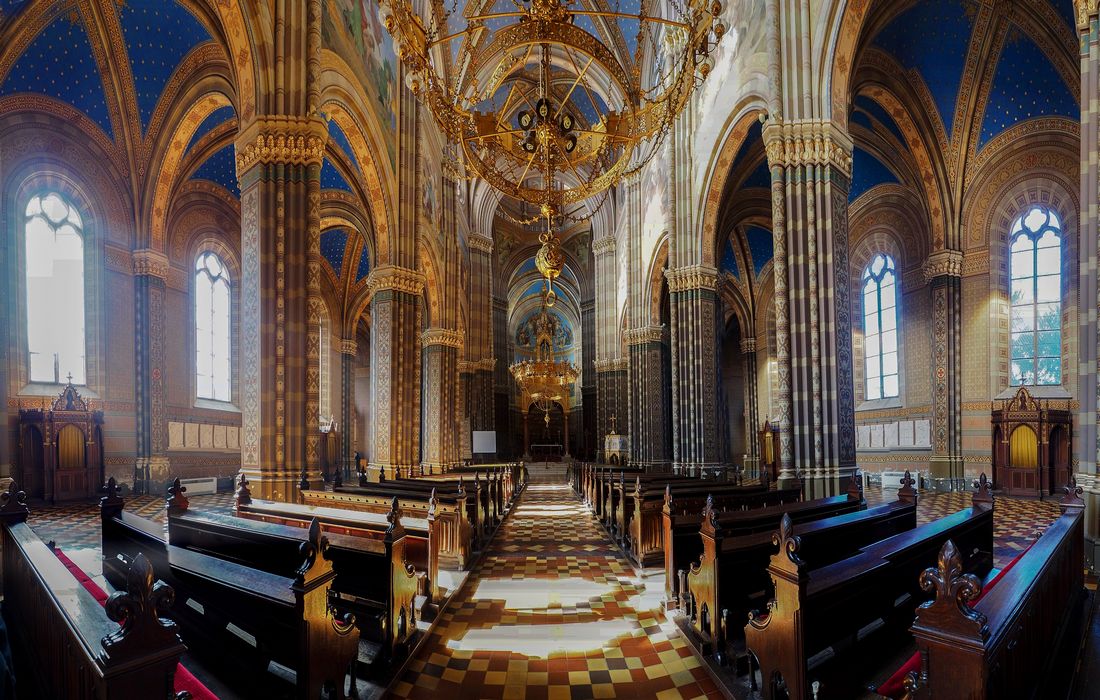
The Cathedral of St. Peter, a symbol of Djakovo and the most significant cultural monument of the town, was built in 1866 in the Romanesque-Gothic style. A masterpiece of architecture. Pope John XXIII called it the most beautiful cathedral between Venice and Istanbul. The merits of the cathedral construction, which lasted from 1866 to 1882, belong to Bishop Josip Juraj Strossmayer, the great Croatian patriot and the noble benefactor of art and education.
State Stud Farm of Lipizzaner horses– world-famous for the centennial tradition of breeding thoroughbred horses. The breeding of Lipizzaner horses started in the early 19th century. In addition to breeding and selecting horses, the stud farm is also famous for horse dressage, the quality of which is confirmed by a remarkable place in equestrian competitions. After the Đakovo Lipizzaners delivered an outstanding performance at the opening of the Olympic Games, Queen Elizabeth II, an expert and admirer of these noble horses, was so impressed that she visited the stud farm in 1972.
Recommendation: Visiting the well-known traditional manifestation Djakovo Embroidery from June 19-July 5, 2026 – an event of the original ethnic folklore.
Give us your feedback


Your message has been sucesfully sent.